SEO automation: what software can do, and what needs you
By Michael Nefedov, noetio · Updated 21 October 2026
SEO automation means software does SEO work people used to do by hand. Tracking, audits and research are safe to automate. New pages need a person.
Short answer
- Tracking, audits, research and briefs are safe to automate. New pages and structural changes need a person to approve.
- Google doesn't ban automation. It bans many pages made to rank without helping people.
- Before you buy a tool, ask the 6 questions below.
Automated SEO: what software can do today
Most of the hours, but not the decisions. Task by task:
| Task | Automate? | A person still |
|---|---|---|
| Rank tracking and reports | Yes | Reads the trend. One reading is noise. |
| Technical audits and alerts | Yes | Decides redirects and canonicals |
| Keyword research | Yes | Checks the real results, picks what's worth it |
| Content briefs | Yes | Checks the search intent |
| Titles and meta, low-traffic pages | Yes | Reviews high-traffic pages |
| Internal links | Draft | Approves before they go live |
| New pages | Draft | Checks the facts and approves |
| Indexing new pages | Partly | Clicks Request indexing |
| AI answer visibility | Partly | Checks the real ChatGPT app |
| Reddit, forums, PR | Draft | Posts as a real person |
The Automate? column is our judgement, not a study.
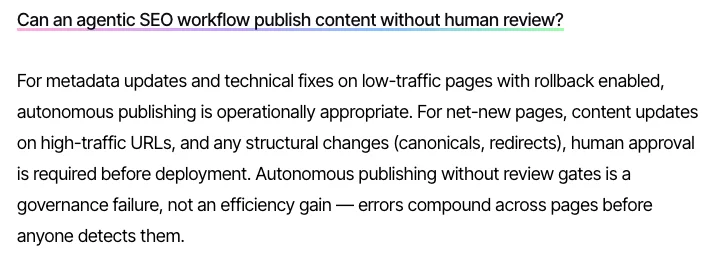
One vendor, Search Atlas, draws the same line in its own workflow: fixes on low-traffic pages can go live alone with rollback, but “For net-new pages, content updates on high-traffic URLs, and any structural changes (canonicals, redirects), human approval is required before deployment.”
The 3 levels of SEO automation software
Software ranges from scripts that only report to agents that ship changes. This is our framing, not an industry standard.
1. Scripts and alerts
Rank tracking, audits, reports. They find and report. They change nothing.
2. AI tools that suggest
Briefs, drafts, title and link ideas. A person makes each change.
3. Agents that do the work
They prepare the change, a person approves it, they ship it and check the result.
We found no independent study showing that level 3 brings more traffic than levels 1 and 2. Be careful with any tool that promises it.
What Google's rules say
Google judges the result, not the tool. Two lines matter most:
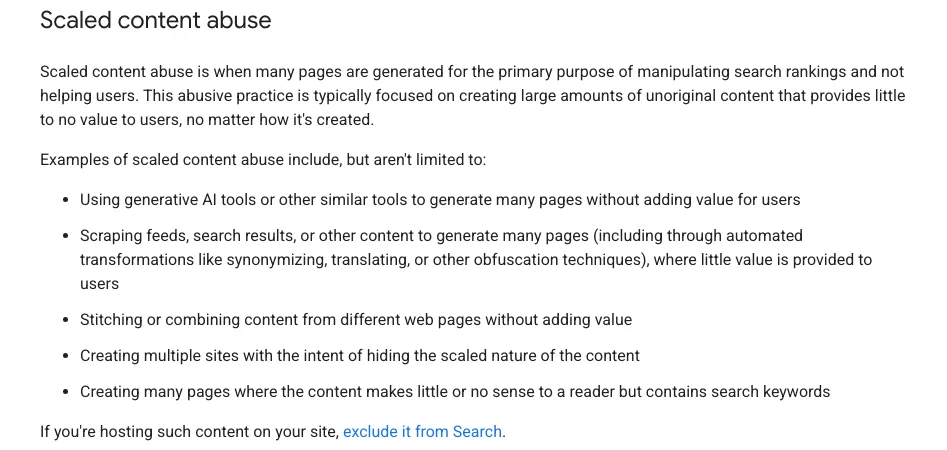
“Scaled content abuse is when many pages are generated for the primary purpose of manipulating search rankings and not helping users.”
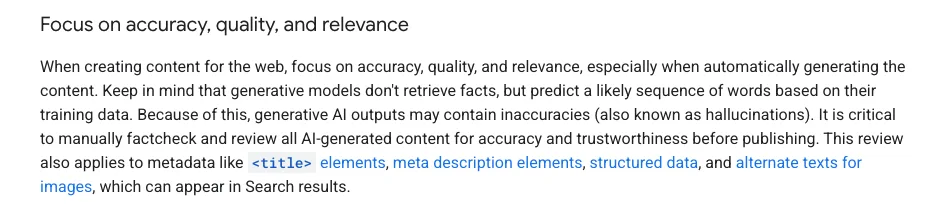
“It is critical to manually factcheck and review all AI-generated content for accuracy and trustworthiness before publishing.”
For off-site work, the site reputation policy covers third-party content published on a host site “mainly because of that host's already-established ranking signals”. Google's link spam list also names paid advertorials, and guest posts or press releases with optimized anchor text, when they pass ranking credit.
What happens without a person
One site's AI-article push reached 610k estimated visits, then lost most of them within about two months. The Decoder reports that Jake Ward used a GPT-4 based tool to publish about 1,800 articles built from a competitor's pages (Exceljet). The traffic below is for his client Causal and is an Ahrefs estimate.
- Early 2023about 200kbefore the campaign
- Early Oct 2023610k
- Mid-Dec 2023190k
Source: The Decoder, AI-powered SEO heist (original 27 November 2023, updated 19 December 2023). Traffic figures are estimates from Ahrefs, as the article says. Read 21 October 2026.
Limits most SEO automation platforms don't mention
Four limits decide what can really run on its own.
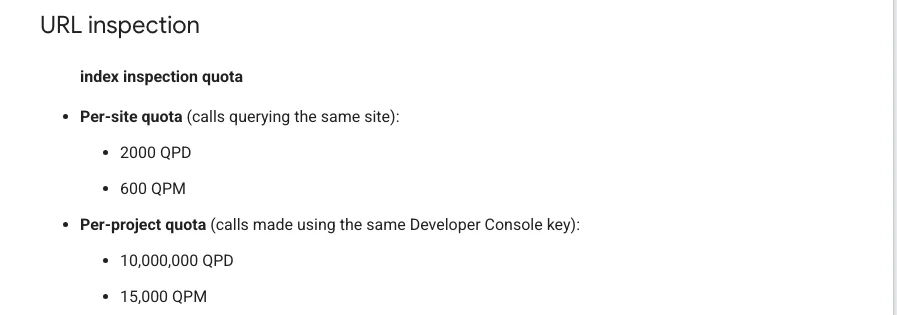
2,000 checks a day
Search Console's URL Inspection API allows 2,000 a day and 600 a minute per site (Google).
Indexing API: 2 page types
Google says it can only be used for pages with JobPosting or BroadcastEvent markup, which means job postings and livestream videos (Google). Using it for normal pages is outside that scope.
AI answers move
The API and the real ChatGPT app answer differently. See how LLM SEO tools measure.
Indexing takes a person
For normal pages: a sitemap, links from other pages, and Request indexing in Search Console by hand.

How to choose an SEO automation platform
Ask six questions; every answer should be yes.
- 1Does every new page and structural change wait for your approval?
- 2Can you undo a change in one step?
- 3Does it show the source for each fact it writes?
- 4Does it measure each change, before and after?
- 5Does it say how it measures AI answers?
- 6Does it avoid the Indexing API for normal pages?
Comparing tools? See AI SEO tools by the job they do, or read what agentic SEO is.
Sources
- Spam policies for Google web search, Google Search Central, last updated 28 August 2026. Read 21 October 2026.
- Guidance on using generative AI content on your website, Google Search Central, last updated 1 October 2026. Read 21 October 2026.
- Usage limits, Google Search Console API, last updated 28 August 2025. Read 21 October 2026.
- Indexing API quickstart, Google Search Central, last updated 16 October 2026. Read 21 October 2026.
- Building an agentic SEO workflow, Search Atlas blog. Read 21 October 2026.
- AI-powered SEO heist: copying a website loses significant Google traffic, The Decoder, updated 19 December 2023. Read 21 October 2026.
Questions
Tracking, audits, reports and research can run without a person. Choosing what to target, checking facts and approving new pages or structural changes still need one. Google itself says AI content should be fact-checked and reviewed before it is published.
Not by itself. Google's spam policies target many pages made mainly to manipulate rankings and not to help users, including pages generated with AI without adding value. A useful, checked page is fine however it was written.
Only partly. Google's Indexing API is officially only for job postings and livestream videos. For normal pages you submit a sitemap, link the page from other pages, and use Request indexing in Search Console by hand.
Turn your next topic into a useful page
Compass reads your website, helps you plan relevant topics and creates sourced article drafts. Review and approve the work, then send it to a connected CMS or export it.
Written by Michael Nefedov, founder of noetio. Updated 21 October 2026.